
API product management concerns the experience and outcomes of the people building on an API. Its customers may be external developers, partners or other teams inside an organization. Their journey includes discovering what the API supports, gaining access, integrating it into a working product and keeping that integration running as both systems change.
This article focuses on priorities and lifecycle decisions for a team offering an API as a product. The separate practical guide to APIs for Product Managers explains endpoints, requests and integration behaviour. Those concepts support the decisions here without requiring another introduction to HTTP.
Define the customer’s job before expanding the API
Consider a hypothetical accommodation provider that offers availability and booking operations to travel applications. Its customer is an organization integrating those capabilities; the developer configures the connection, while a traveller eventually uses the resulting booking journey. Product discovery needs to distinguish the integration work from the outcome it enables.
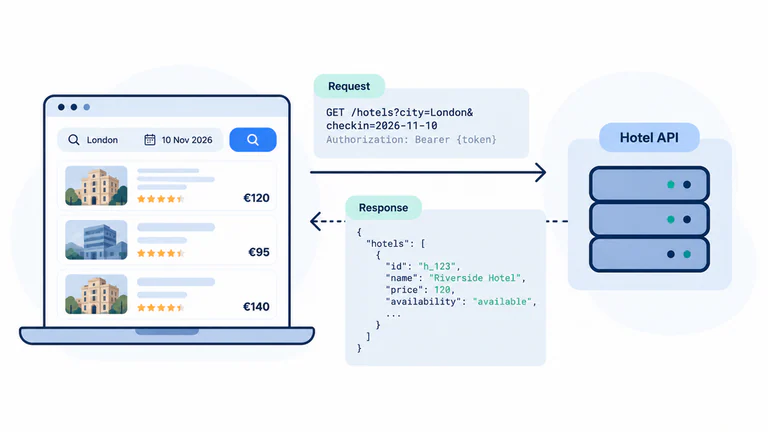
A partner may be able to search for rooms but unable to complete a booking because the API does not return a required cancellation condition. Another may have all the operations it needs but struggle to move from test credentials to production access. These problems call for different work: adding missing capabilities, clarifying the contract or improving onboarding.
A useful starting point is one supported journey with explicit boundaries: which markets and customer types it serves, which operations are available and what remains outside scope. That definition gives partner requests a context. A new endpoint is easier to assess when the team knows which complete journey it is intended to unblock.
Prioritize a working integration over a feature inventory
The backlog can contain new operations, documentation changes, SDK improvements, reliability work and migration support. They compete for the same capacity, but counting endpoints treats these investments as if they produced equivalent outcomes. An example that resolves a recurring integration error may help more customers complete their first transaction than an operation requested by one prospect.
For the accommodation API, a prioritization review can trace where a partner stops: account approval, credentials, a successful search, a test booking or a production booking. A successful search is evidence of progress, but it does not establish that the partner can sell a room. The team needs to inspect the later steps before attributing low adoption to weak demand.
Partner interviews and support cases help explain those gaps. They need to be read alongside usage data and the commercial context. A low-volume partner may still support a strategically important market, while high request volume could reflect inefficient polling rather than meaningful adoption. The decision should name the customer outcome and the evidence supporting the proposed investment.
Set expectations that match the dependency
An API customer plans its own product around the provider’s contract. Permissions, response fields and failure behaviour therefore become part of that customer’s delivery constraints. When an operation accepts work for later processing, documentation should explain how the customer discovers the outcome and how uncertain states can be recovered.
The familiar checkout illustrates the dependency from the consuming product’s side. Payments, inventory and shipping may each be operated by a different team or supplier. An API provider that changes its behaviour can affect several parts of the journey built around it.
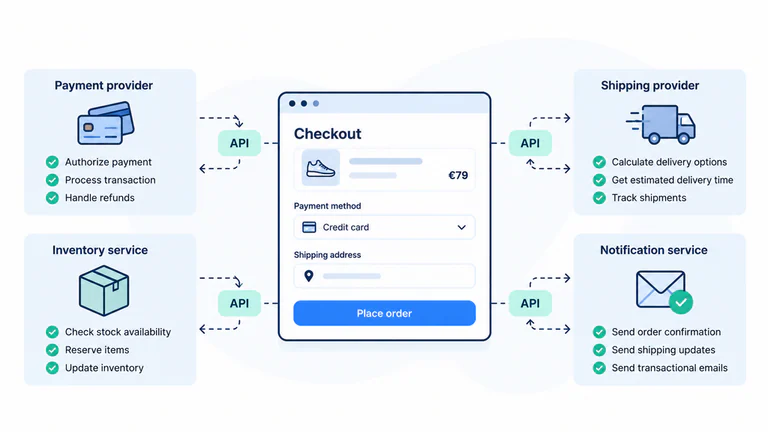
Choosing an external API also leaves work with the consuming team. It still owns the integration, the user-facing handling of failures and the consequences of supplier changes. A build-or-buy comparison should account for that work, request charges and any contractual or market constraints, rather than treat integration as the entire ongoing cost.
When offering an API, specify what support covers, how incidents are communicated and which service commitments actually apply. Those commitments must reflect the service that can be operated. Adding another dependency to the provider’s architecture may change what it can promise to its customers.
Measure adoption through the customer journey
Define activation in terms of a useful milestone for this API. In the accommodation example, a first successful production booking is more informative than a created API key alone. Time to that milestone can expose onboarding friction, provided the team distinguishes waiting for internal approval from difficulty understanding or using the interface.
Retention needs similar context. An integration used regularly by a travel platform has a different expected pattern from one that serves seasonal demand. Technical indicators such as error rates and response time can help investigate a decline, but they do not prove its cause. A partner might stop sending bookings because it lost customers, changed suppliers or encountered an unresolved technical issue.
Choose denominators explicitly. Request success measures calls, while completed bookings measure a business flow that may involve several calls and later notifications. Counting every call as a customer conversion would misrepresent the journey. A review can combine integration milestones, support evidence and the commercial value of the completed flow.
Make change management part of the roadmap
A contract change can require engineering work in every consuming product. The provider should assess which integrations may be affected, test the proposed behaviour and explain what customers need to do. A version identifier alone does not provide a migration plan.
For example, replacing one cancellation field with a structured policy could improve the model while breaking an existing partner’s display. The team might need a compatibility period, examples and support for testing the replacement. The appropriate approach depends on the existing contract and the integrations affected. Stripe’s upgrade documentation provides a real example of version selection and integration testing.
Keep ownership visible after release: who responds to partner incidents, maintains examples and SDKs, reviews adoption and manages deprecation notices. An API roadmap that includes only new operations leaves those responsibilities competing for capacity without an explicit decision.
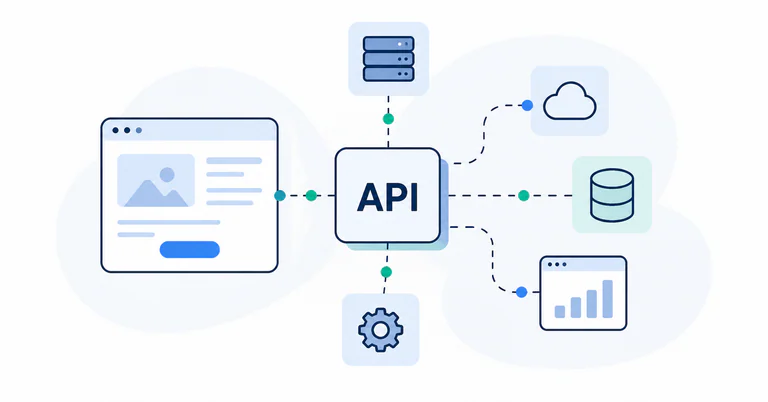
For a visual vocabulary refresher, use the API infographic. For an integration review, return to the practical API guide; the focused articles on API keys and OAuth and webhooks and polling cover access and update behaviour. The book APIs for Product Managers develops the relationship between those technical choices and product work.
Reference
The OpenAPI Initiative explains how a structured description communicates an HTTP API contract. That description supports documentation and tooling; customer discovery and operational evidence still determine what the team should invest in.