

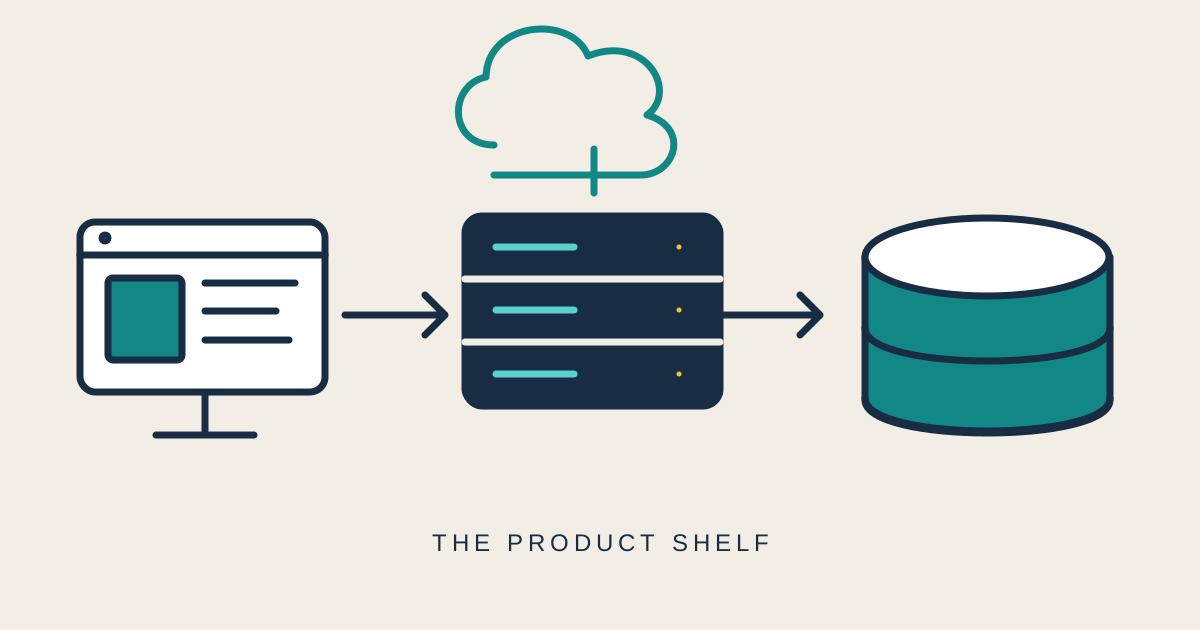
A technical estimate can include work on several systems even when the proposed change appears on a single screen. Understanding the path from the interface to stored data helps a Product Manager discuss that scope with Engineering. APIs, dependencies and the release process explain where the work arises and which assumptions need checking.
A practical starting point is one customer action. In a hypothetical booking application, a person chooses an appointment and presses Confirm. The visible interaction is brief, but the system may need to check availability, validate permissions, reserve a slot, take payment and send a message. Understanding that journey helps explain why a seemingly small interface change can involve several teams.
Start with the path from frontend to backend
The frontend is the part through which a user interacts with the product, such as a web interface or mobile application. The backend runs the server-side behaviour that supports it. A browser sends requests and receives responses; MDN’s explanation of how the web works introduces that client-server exchange.
In the booking example, the frontend can show a slot as available, but that display is not enough to guarantee a reservation. Another person may select it before confirmation. The backend must enforce the relevant booking rules. The product requirement needs to describe what the customer sees if availability changes during confirmation.
Understand APIs as contracts between systems
An API defines how software can request a capability or exchange information. Its contract describes the operations, required information and expected responses. The interface may connect a frontend to a backend, separate internal services or integrate an external provider.
For the appointment flow, ask what confirms that the reservation exists and what happens if the response never arrives. A network timeout does not establish whether the server completed the operation. Retrying could create another reservation unless the system recognises the repeated attempt. Request fields, error states and retry behaviour therefore shape the customer experience. The API guide for PMs explains these building blocks in more detail.
Data models affect what the product can promise
A database stores information that the product needs to retrieve or change. The data model determines how concepts such as customers, appointments and locations relate. Supporting one appointment across several locations can change how records relate and require updates to existing workflows.
Distinguish the system that records the booking from the data used for reporting. Analytics may receive events later, so a dashboard can temporarily differ from the operational system. Define identifiers, timestamps and qualifying events before using a funnel to assess a release. Otherwise a measurement change can look like a change in customer behaviour.
Dependencies explain the scope of a change
Architecture describes how system components are organised and how they interact. A diagram can show where the booking flow depends on identity, availability, payments and messaging. Read it by following one action through the components, identifying the information exchanged and asking who owns each part.
The customer may need an immediate answer about the booking while the confirmation email can arrive afterwards. A background job or queue can separate those steps, but introduces questions about pending work, retries and delays. Ask which result the product can confirm immediately and how users or support will recognise unfinished work.
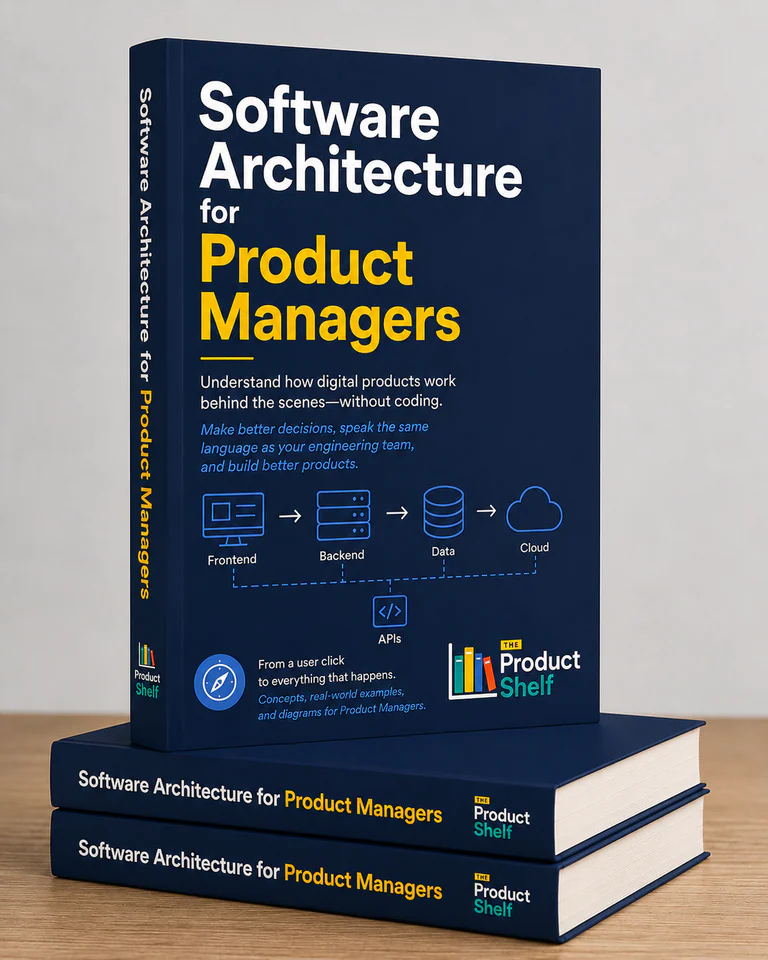
The book Software Architecture for Product Managers develops this way of reading a system through its components and interactions. It provides a starting point for understanding the technical discussions behind product scope and dependencies.
Availability, performance and scaling answer different questions
Availability concerns whether a service can be used; latency concerns how long an operation takes. A booking page can remain accessible while confirmation becomes too slow to be useful. Define expectations for the customer journey, then agree which technical signals help explain whether those expectations are being met.
Scaling adds or adjusts resources, but its effect depends on the bottleneck. More application instances may not resolve a slow database query or an external provider’s limit. Containers and Kubernetes describe ways of packaging and managing workloads; they do not remove the need to understand those constraints. The Kubernetes overview describes its scope and the capabilities it does not provide automatically.
Cloud choices also affect cost and operational work. A managed service can delegate some tasks to a provider while leaving configuration, access and product behaviour with the team. Before a campaign, discuss the expected workload, the first likely limit and how spending will be monitored. Cloud and Infrastructure for Product Managers covers these decisions from a product perspective.
Security and reliability belong in the requirements
Authentication establishes identity; authorisation determines which operations or resources that identity can access. In the booking application, a signed-in customer should not be able to read another organisation’s appointments merely by changing an identifier. The component handling the operation must enforce those permissions even when the interface already hides unavailable actions.
Also define what happens during partial failure. If payment succeeds but booking confirmation is delayed, support needs enough information to investigate the operation without asking the customer to pay again. Recording useful identifiers and states helps connect evidence across services. Logs, metrics and traces can support that investigation when the team has planned what to capture.
A release changes more than the screen
Tests provide evidence about defined behaviour under the conditions tested. Passing checks cannot establish that every production journey will work. Discuss the affected paths, data differences, monitoring and recovery before a launch. A deployment may install a version before a feature is made available, as explained in Deployment vs. Release.
For the booking change, acceptance criteria might cover a slot becoming unavailable during confirmation, repeated requests and delayed notifications. Agree who observes the first real operations and what would trigger a pause. Reverting code may not undo payments or data already created, so recovery must account for those effects separately.
A learning plan tied to the product you manage
Choose one workflow and ask Engineering to sketch its components. Follow one request, identify where its state is stored and note how success or failure becomes visible. Read the relevant contract and review an incident or change with the team. Each unfamiliar concept then has a place in a system you already need to understand.
Use Software Architecture for Product Managers to build that system-level understanding, then deepen the area your current decisions require: APIs, data, cloud or delivery. Keep a small record of assumptions and unresolved questions for the next planning conversation; it will show which technical knowledge you can already use and where you still need help.